A good travel plan used to mean a sensible flight, a confirmed stay and enough time to get to the airport. In 2026, there is another layer to check. The EU Entry/Exit System is now part of travel to the Schengen area, ETIAS is expected later in 2026, and the UK has its own Electronic Travel Authorisation scheme for many visitors coming into the UK.
This does not mean every trip is complicated. It does mean travellers should stop treating border admin as a last-minute detail. If your passport, booking references, airport timings and entry requirements are scattered across screenshots and emails, the risk of missing something is higher than it needs to be.
First, separate EES, ETIAS and UK ETA
The names sound similar, but they do different jobs. The EU Entry/Exit System, usually shortened to EES, is a border registration system for non-EU travellers entering and leaving the Schengen area for short stays. It replaces the old manual passport stamp process with a digital record.
ETIAS is different. It is a future travel authorisation for visa-exempt visitors to many European countries. As of this article's review date, GOV.UK says ETIAS is expected from autumn 2026 and that travellers do not need to take action yet. Be careful with unofficial websites claiming to sell ETIAS early.
UK ETA is the UK's Electronic Travel Authorisation. It affects many visitors travelling to the UK, not British citizens taking a holiday abroad. If friends or family are flying into the UK to join a trip, wedding or cruise, this may matter to them even if it does not matter to you personally.
What EES means for a Schengen trip
If you are using a UK passport for a short stay in the Schengen area, you may need to register biometric details at the border. GOV.UK describes this as fingerprints and a photo, with no action required before arrival and no fee for EES registration.
The practical point is time. Your first EES registration on a trip can take longer than a simple passport stamp. At some routes, such as Eurostar from London St Pancras, Eurotunnel Le Shuttle at Folkestone and the Port of Dover, checks may happen before you leave the UK. For many air arrivals into the Schengen area, registration happens at the destination border.
- Check whether your destination is in the Schengen area, not just whether it is in Europe.
- Allow more time at the border, especially on a first trip after EES registration applies to you.
- Keep children, family groups and special assistance needs in mind when planning connection time.
- Remember that Ireland and Cyprus are not in the Schengen area, so EES does not apply in the same way there.
- Track your 90 days in any 180-day period if you travel to the Schengen area often.
Why ETIAS is worth knowing about now
ETIAS is not the same thing as EES. EES happens at the border. ETIAS will be a pre-travel authorisation when it launches. That distinction matters because travellers can easily confuse the two and either worry too early or miss the requirement later.
For a trip in spring or summer 2026, the key job is to know that ETIAS is not something to buy from a random website today. For a trip later in 2026 or beyond, it becomes something to re-check before final payment, especially if you are booking flights and accommodation far in advance.
Do not forget UK ETA for inbound travellers
UK ETA is easy for UK-based holidaymakers to ignore because it is not a permission for British citizens to leave the UK. But travel plans often involve people moving in both directions. If relatives from the United States, Canada, Europe or another eligible country are coming to the UK before a joint trip, they may need a UK ETA, eVisa, visa or another valid document before boarding.
This matters for cruises, weddings, family holidays, sports trips and group itineraries that start in the UK. One traveller missing a digital permission can disrupt the wider plan even when everyone else's flights and hotels are correct.
The 2026 pre-booking checklist
Before you book, check the admin in the same way you would check baggage allowance or hotel location. The goal is not to overcomplicate the trip. It is to spot problems while flights, dates and hotels are still easy to change.
- Confirm each traveller's passport nationality and expiry date.
- Check the official entry requirements for every country in the itinerary.
- Check whether the trip enters the Schengen area, leaves it, then re-enters it.
- Check whether any traveller is close to the 90-in-180-day Schengen limit.
- Check whether ETIAS may apply by the travel date if the trip is later in 2026.
- Check whether inbound visitors to the UK need a UK ETA or visa before travelling.
- Check whether a cruise, self-transfer or separate ticket changes where border checks happen.
The airport and connection-time checklist
New border checks do not automatically mean your trip is risky. They do mean tight timing deserves more scrutiny. This is especially true if you are travelling on separate tickets, changing airports, collecting baggage, or meeting a cruise, train or tour at the other end.
- Add extra time when your first Schengen border crossing is immediately before another connection.
- Be cautious with same-day self-transfers that depend on fast immigration and baggage reclaim.
- Check whether your airline, ferry operator, Eurostar, Eurotunnel or port has route-specific advice.
- Keep booking references and documents available offline in case mobile data or airport Wi-Fi is poor.
- Plan what you would do if one traveller in the group is delayed at checks.
There is also a wider travel environment to watch in 2026. ABTA says UK holidays are going ahead and that it is not aware of UK flights being cancelled due to jet fuel availability, while still reminding travellers to check insurance and understand their protections. That is a sensible tone to copy: do not panic, but do plan with more resilience than a bare-bones itinerary gives you.
How to organise the admin inside a trip planner app
This is where a trip planner app is useful. The admin does not need to live in separate places: one email for flights, a browser tab for entry rules, a screenshot for the hotel, and a note saying "check ETIAS". Put the moving parts into the trip itself.
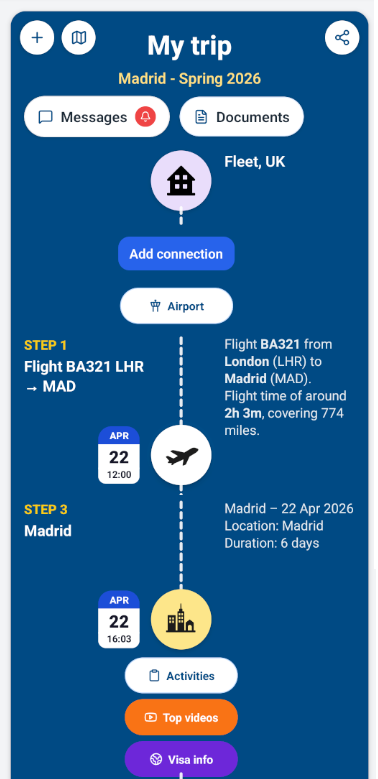
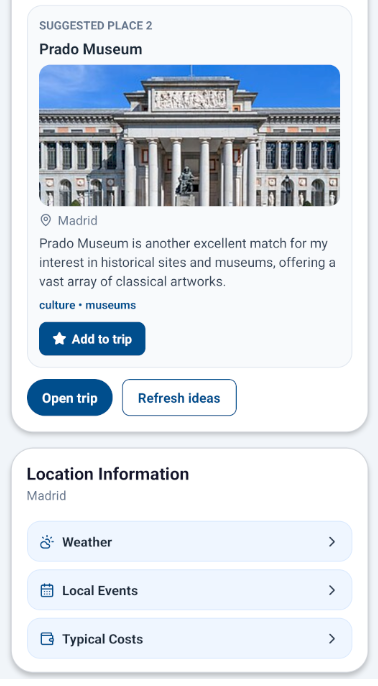
In aviaroute, you can upload itinerary PDFs or screenshots, organise flights and stays, add documents, and keep the trip timeline visible. That makes it easier to see where a border check sits in the actual travel day, not as an abstract rule you read about once and forgot.
A simple admin workflow for 2026 trips
The easiest approach is to run one short admin pass when you first plan the trip, then another one shortly before departure. That second check matters because ETIAS timing, operator advice and country entry pages can change.
- Create the trip and add the confirmed flights, stays and transfers.
- Add each traveller's key document checks as notes or tasks.
- Save official links for destination entry rules, EES guidance and operator advice.
- Review the first Schengen border crossing and add extra buffer if needed.
- Re-check official guidance before final payment and again in the week before travel.
Bottom line
EES, ETIAS and UK ETA are not reasons to avoid travel. They are reasons to treat travel admin as part of the itinerary rather than an afterthought. The flights and hotels still matter, but so do passport expiry dates, border timing, digital permissions and document access.
The best practical move is simple: build a trip plan that includes the admin. If you can see your flights, stays, documents and border checks in one place, you are much less likely to discover a weak point at the airport.
Sources checked for this article
- GOV.UK: EU Entry/Exit System
- GOV.UK: Entry/Exit System border checks for Brits
- European Union: key differences between ETIAS and EES
- GOV.UK: UK Electronic Travel Authorisation
- ABTA: jet fuel prices and availability, what travellers need to know
Use aviaroute as your trip planner app to upload travel documents, organise flights and stays, add key checks, and keep your 2026 travel admin attached to the trip itself.
Open aviaroute